


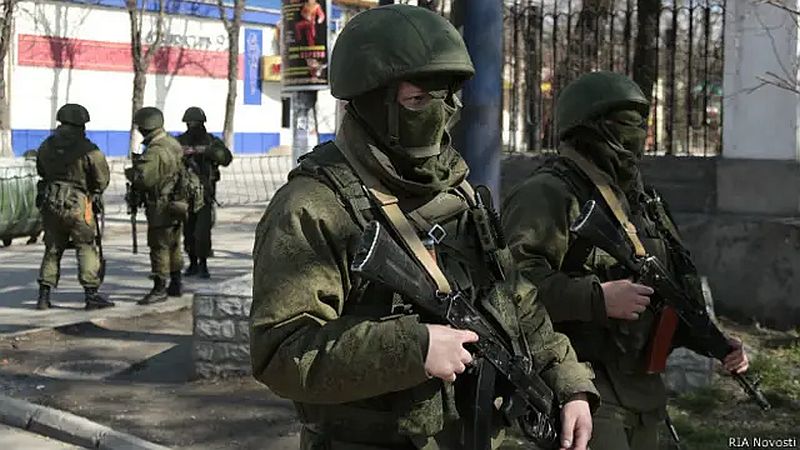
For years, the world comforted itself with a convenient story. Crimea was an exception. A historical accident. A product of Russian authoritarianism that could not be repeated elsewhere, especially not by liberal democracies. The lesson was supposed to be learned, the rules restored, the damage contained.
That illusion is collapsing.
Today, the shadow of Crimea stretches far beyond the Black Sea and falls over Greenland. This is not a slogan or a provocation for headlines. It is a structural comparison of how modern power behaves when strategic interests outweigh legal norms. Different actors, different flags, different rhetoric – but an increasingly familiar script.
Autonomy as a Strategic Weakness
Crimea did not begin with soldiers. It began with autonomy. Its special status within Ukraine was presented as a safeguard for local identity and self-governance. In reality, it created a grey zone where sovereignty was diluted and responsibility blurred.
Greenland occupies a similar position. An autonomous territory within the Kingdom of Denmark, endowed with self-rule but lacking full sovereignty. This status is often portrayed as empowerment. In geopolitics, however, autonomy frequently functions as a pressure point. It allows external actors to bypass the central state while claiming respect for “local choice.”
Autonomy, in such cases, becomes not protection but exposure.
Military Presence as an Anchor of Control
In Crimea, the Russian Black Sea Fleet was not merely a military asset. It was an anchor of inevitability. Once the political decision was made, the infrastructure for control already existed. Events unfolded quickly because the groundwork had been laid for decades.
Greenland’s situation is arguably more subtle and therefore more dangerous. U.S. military facilities are legal, normalized and wrapped in the language of collective security. They do not look like occupation forces. That is precisely the point.
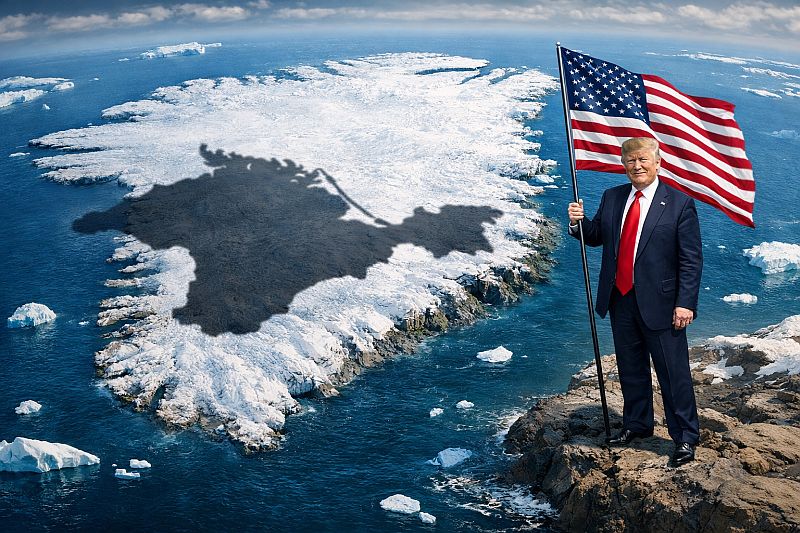
When military presence is permanent, normalized and uncontested, it ceases to be defensive and becomes structural. Control does not need to be seized. It only needs to be activated.
History as a License, Not a Lesson
Every territorial takeover requires justification. In Crimea, history was weaponized. Narratives about past borders and historical belonging were used to override contemporary law. Accuracy was irrelevant. Emotional resonance was enough.
In Greenland, the narrative is different but serves the same function. The island is framed as a natural extension of North America, as an inevitable component of U.S. strategic depth in the Arctic. Geography replaces ethnicity, but the logic is identical. If something is deemed “naturally ours,” legal ownership becomes secondary.
History, in these cases, is not consulted. It is conscripted.
Annexation Without Invasion
Empires prefer gradualism when possible. Crimea’s annexation was preceded by years of economic penetration, cultural influence and political conditioning. The military phase was merely the closing act.
Greenland does not require tanks. It can be absorbed through contracts, investments, logistics and employment. Economic gravity is often stronger than force. When a territory’s prosperity becomes structurally dependent on one external actor, political alignment follows almost automatically.
Annexation no longer needs explosions. It needs balance sheets.
Loyalty Bought, Not Born
One of the most persistent myths about Crimea is that ethnicity was decisive. In reality, economic dependency and perceived stability mattered more than identity. People align with whoever guarantees their livelihoods.
Greenland’s small population makes this mechanism even more potent. Jobs connected to military infrastructure, subcontracting, services and logistics create a class whose economic future is tied to U.S. presence. Over time, loyalty becomes transactional.
When survival and prosperity depend on one power, sovereignty becomes an abstract concept.
Power Without Disguise
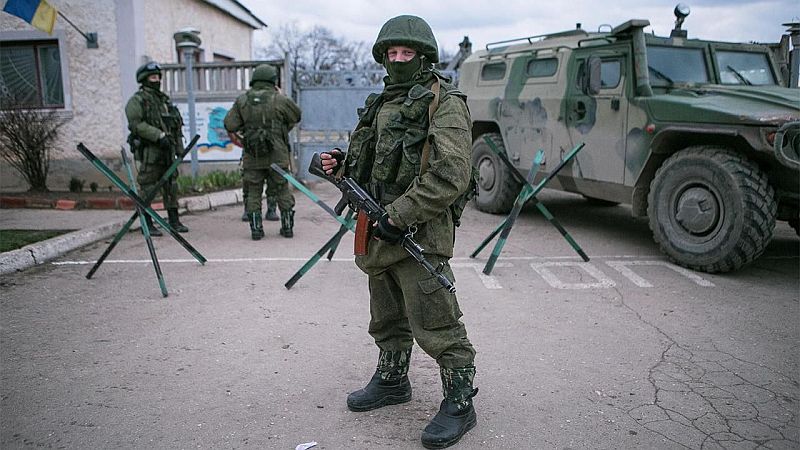
Russia in 2014 felt the need to hide. The “little green men” were a symptom of geopolitical insecurity. Plausible deniability was necessary because the Kremlin feared direct confrontation.
The United States does not suffer from that constraint. It does not need masks. Its power is institutionalized, normalized and often perceived as benevolent by default. Actions are framed as security measures, stability guarantees or strategic necessities.
This is what makes the Greenland scenario more unsettling. It may unfold without shock, without a single dramatic moment that forces global reaction. Normalization replaces outrage.
NATO as a Stage Prop
Supporters of the status quo often point to NATO as the ultimate safeguard. Denmark is a member. Therefore, the argument goes, a Crimea-style scenario is impossible.
This ignores political reality. Alliances do not confront hegemons. They adapt to them. NATO is not a neutral arbiter. It is a structure shaped by power asymmetry.
The rhetoric of Donald Trump openly reduces alliances to transactions. Security is conditional. Commitments are negotiable. In such a framework, Greenland is not protected by NATO. NATO is constrained by U.S. interests.
The Referendum Illusion
Crimea’s referendum was not a decision point. It was a seal. Control existed before ballots were printed. The vote merely provided a theatrical veneer of legitimacy.
Should Greenland ever face a similar “choice,” it would likely follow the same pattern. Economic dependence, security reliance and demographic shifts would shape the outcome long before any formal consultation. Democracy, under such conditions, becomes procedural rather than substantive.
A vote held after dependency is established does not express will. It confirms dominance.
The Price No One Fears Paying
International law relies on enforcement through cost. Crimea demonstrated that powerful states can absorb that cost if the prize is deemed valuable enough. Condemnation fades. Sanctions normalize. New crises distract attention.
For the United States, the potential cost of asserting control over Greenland appears even lower. Economic retaliation against a global hegemon is structurally weak. Pressure flows outward, not inward.
When the strongest actor decides that the price is acceptable, rules become optional.
From Exception to Template
Greenland is not Crimea. Not yet. But Crimea was not inevitable either, until it was. The danger lies not in identical details but in replicated logic.
Autonomy that weakens sovereignty. Military presence that predates political control. Economic dependence that manufactures loyalty. Historical narratives that excuse ambition. Legal rituals that sanctify outcomes already decided.
If the world accepts this process again, it signals the end of the post-Cold War illusion. Power will no longer pretend to obey law. It will simply act, confident that resistance will be symbolic and temporary.
Crimea was a warning. Greenland may be the confirmation.
Original article: Greenland is following Crimea’s path. An analysis of creeping annexation in the 21st century.